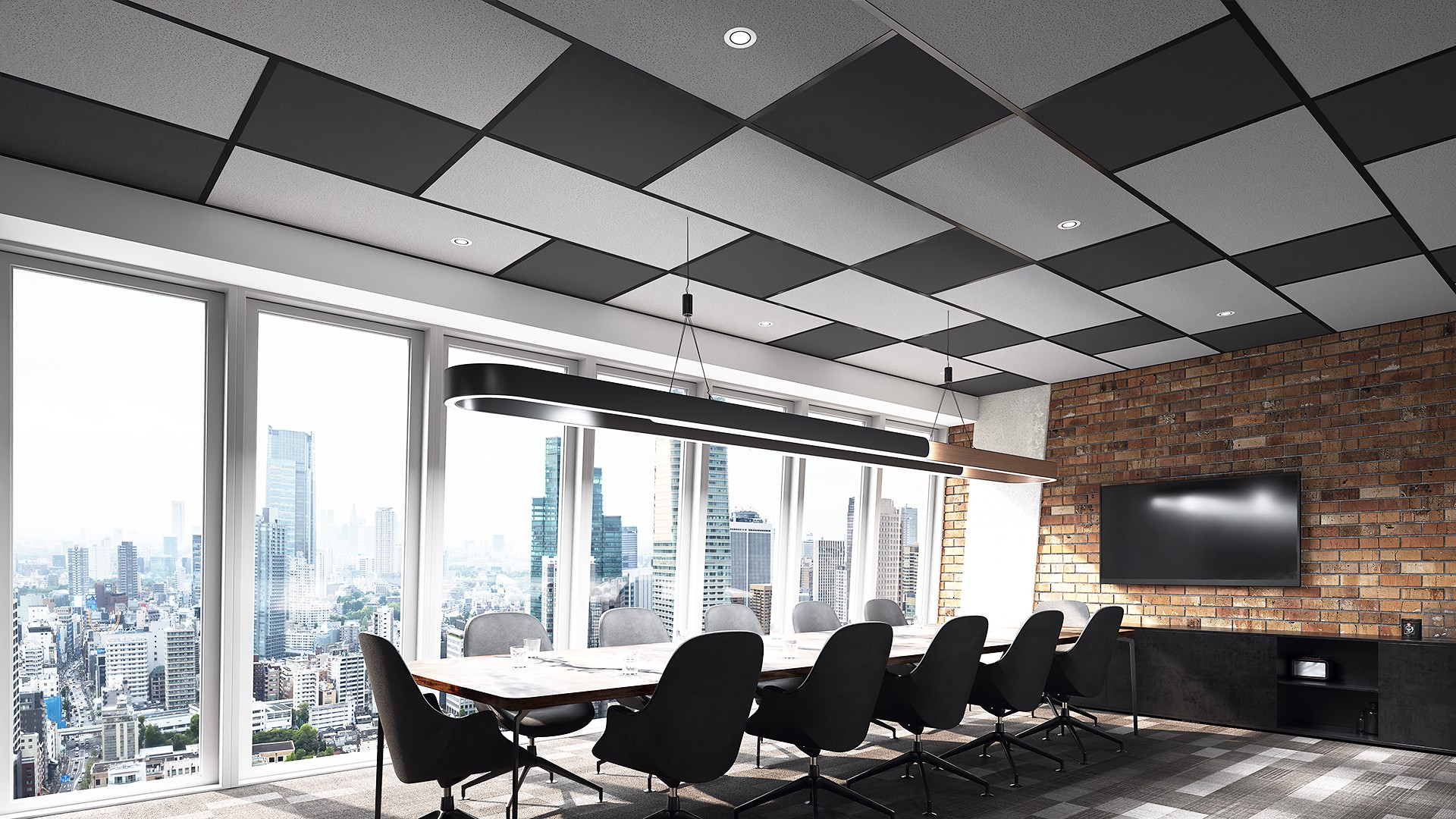
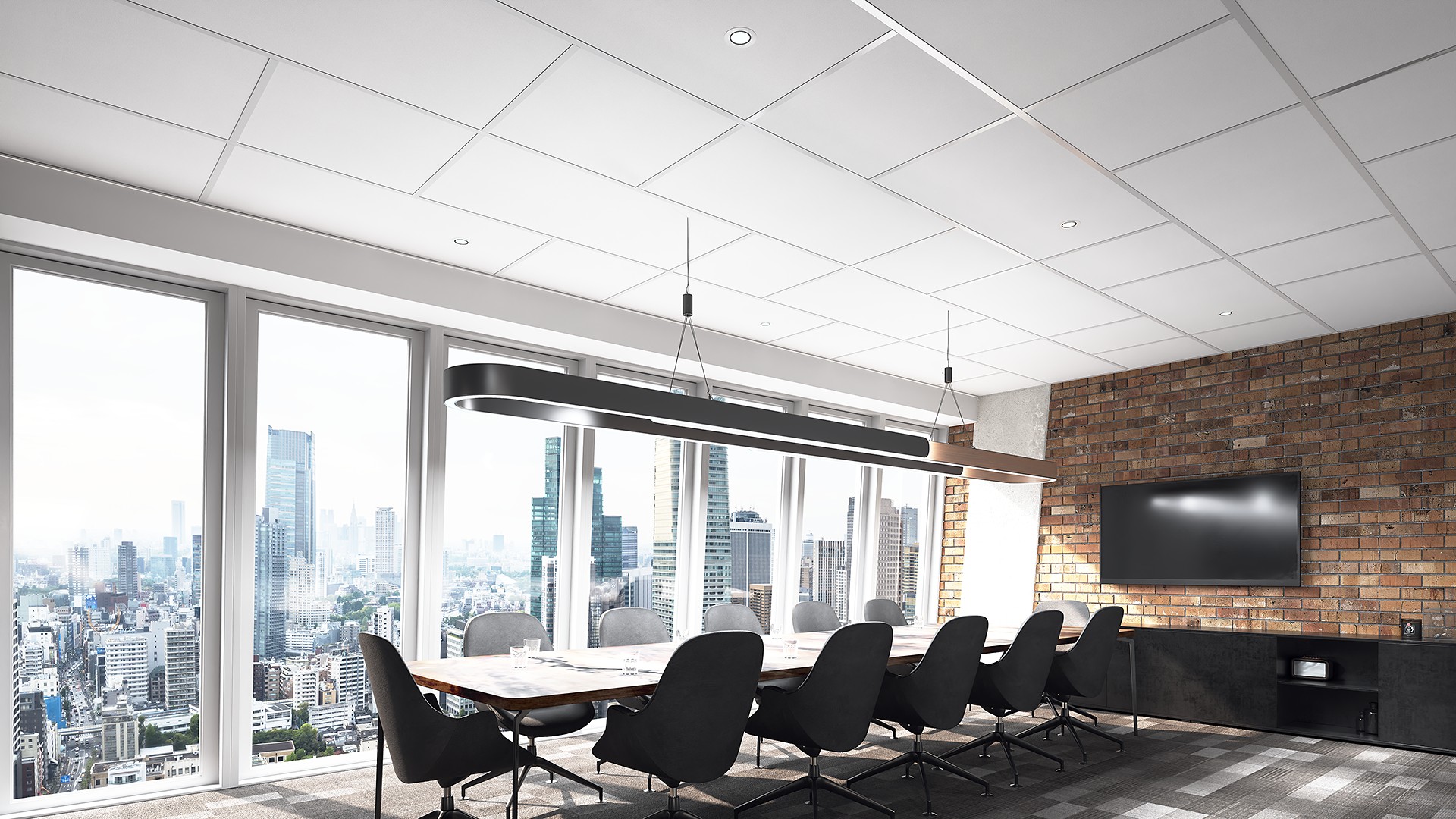
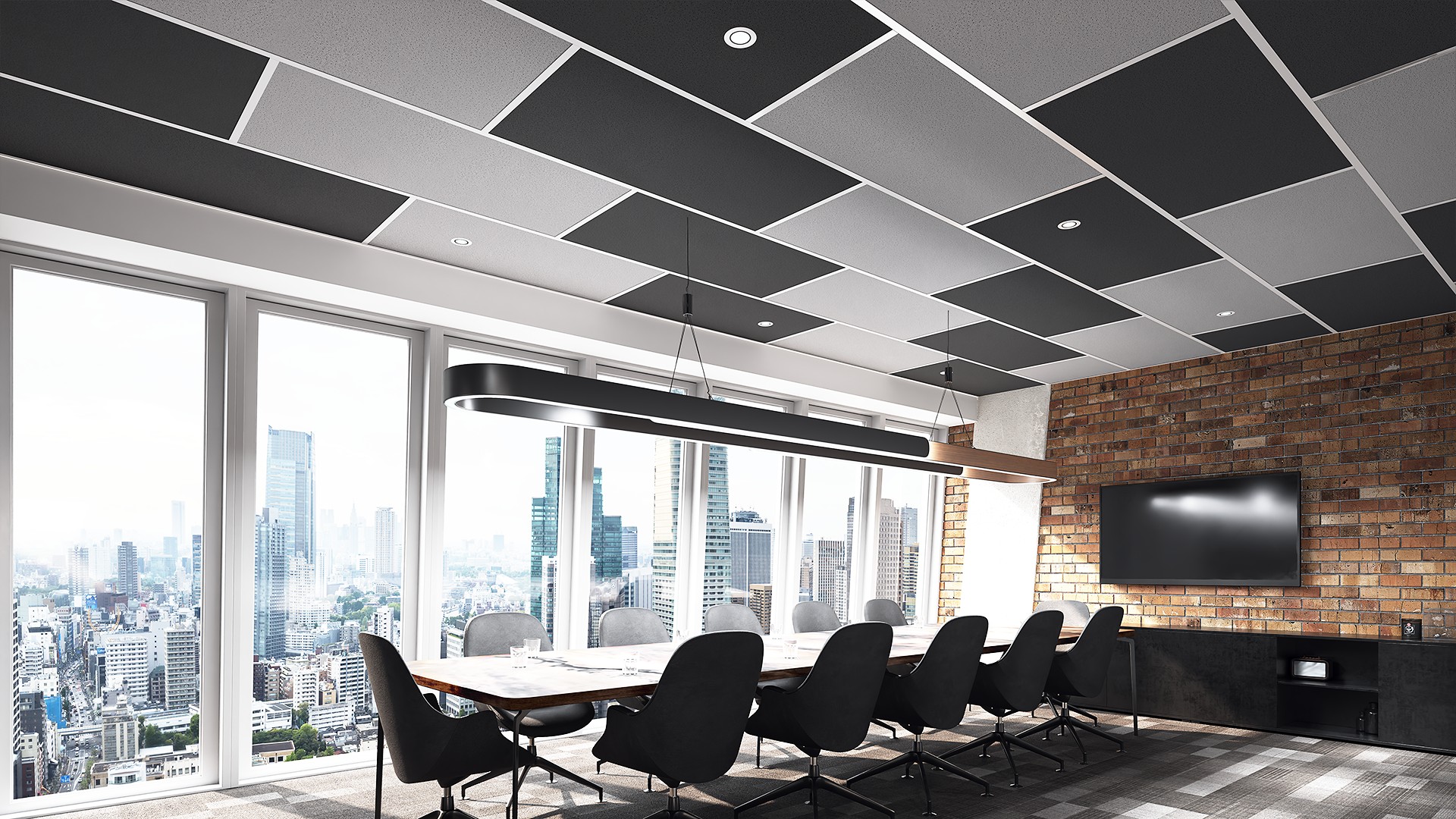
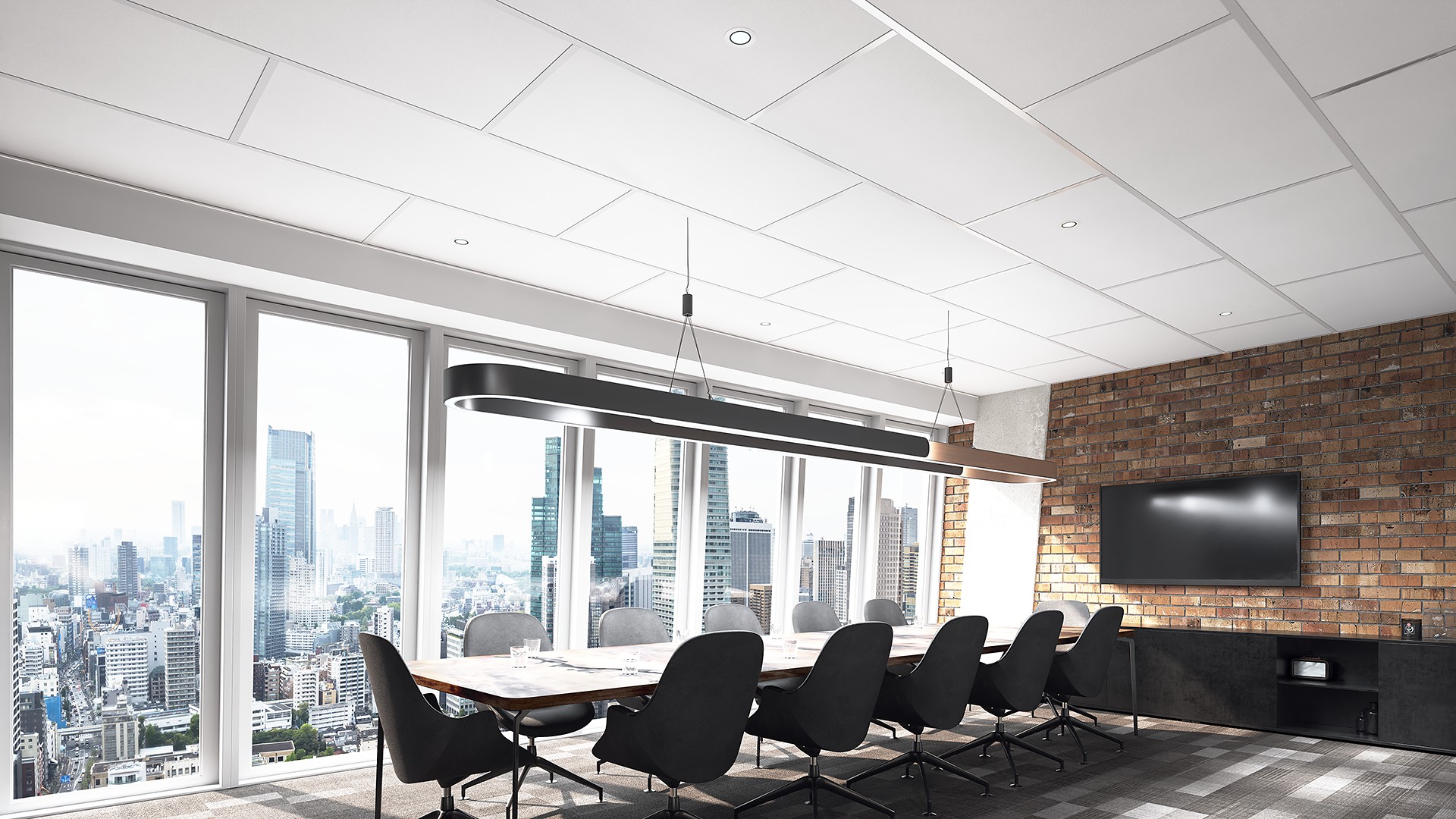
Nexus Layouts is a new addition to the Zentia portfolio. What prompted the development of this new ceiling system, and why launch it now?
Firstly, Nexus Layouts is a conversion of a similar pattern in our discontinuous Sonify product, a canopy and baffle system. The Nexus range within that has been very popular among specifiers, and it made sense to create a continuous wall-to-wall version of this concept.
Secondly, Nexus Layouts adds creativity and configurability, helping to elevate and reimagine traditional ceiling design.
Why now? The hotelification trend, which is the upgrading of standard office spaces into high-end hospitality focused environments that prioritise employee comfort, was the main driver. A more playful space where designers can mix texture, pattern and colours helps to meet these requirements, attracting the workforce back into the office.
These offices are now being used differently to how they were in the past, with more hot desks, breakout spaces, quiet zones, collaborating and socialising areas. There are fewer cellular offices and corridors, and more open plan with marked zones. Nexus Layouts helps to define zones within these environments, while also meeting hidden performance requirements such as acoustic comfort.
For people encountering Nexus Layouts for the first time, how would you describe the core idea behind combining different module sizes into repeatable architectural patterns?
The most important factor when we designed Nexus Layouts as a concept was that it should be easy to plan and simple to install. By having five standard patterns we have done some of the hard work for the designer, but these act as inspiration, as custom designs beyond these patterns are also possible.
Our five patterns are designed to be repeatable. For example, if you have a larger area than the standard pattern, it can be copied and pasted over much larger areas and all built from standard components.
The patterns are constrained by the installation recommendations of a standard suspended ceiling. Main runners are spaced at 1200 mm centres and the patterns fit within this module because we only use 600 x 600 and 1200 x 600 tiles.
Nexus Layouts arrives into a market long dominated by standard grid ceilings. What gap or unmet design need does this system address?
Standard grid modules of 600 x 600 or 1200 x 600 are all installed in the same way, and all look the same. This is generally because a ceiling is required for a particular function, such as hiding surfaces, lowering the height of the space, integrating services or offering fire and acoustic performance.
With Nexus Layouts we can still offer all of those functional requirements but add the flexibility to create aesthetically pleasing solutions.
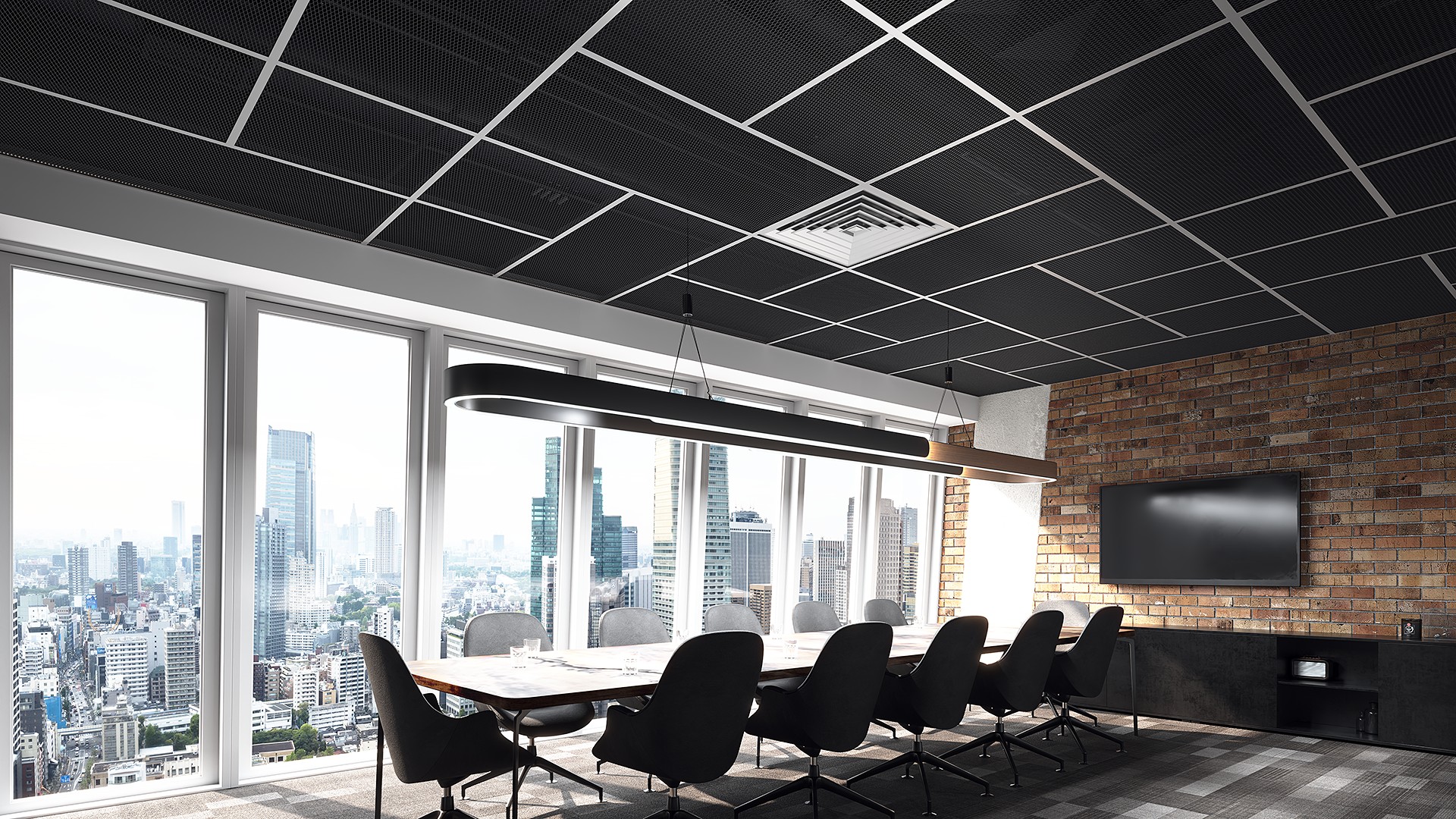 Nexus Layouts launched across multiple tile families, from acoustic tiles like Oplia, Prestige and Aruba to metal mesh like DecoMesh. Why was a multi-material launch important?
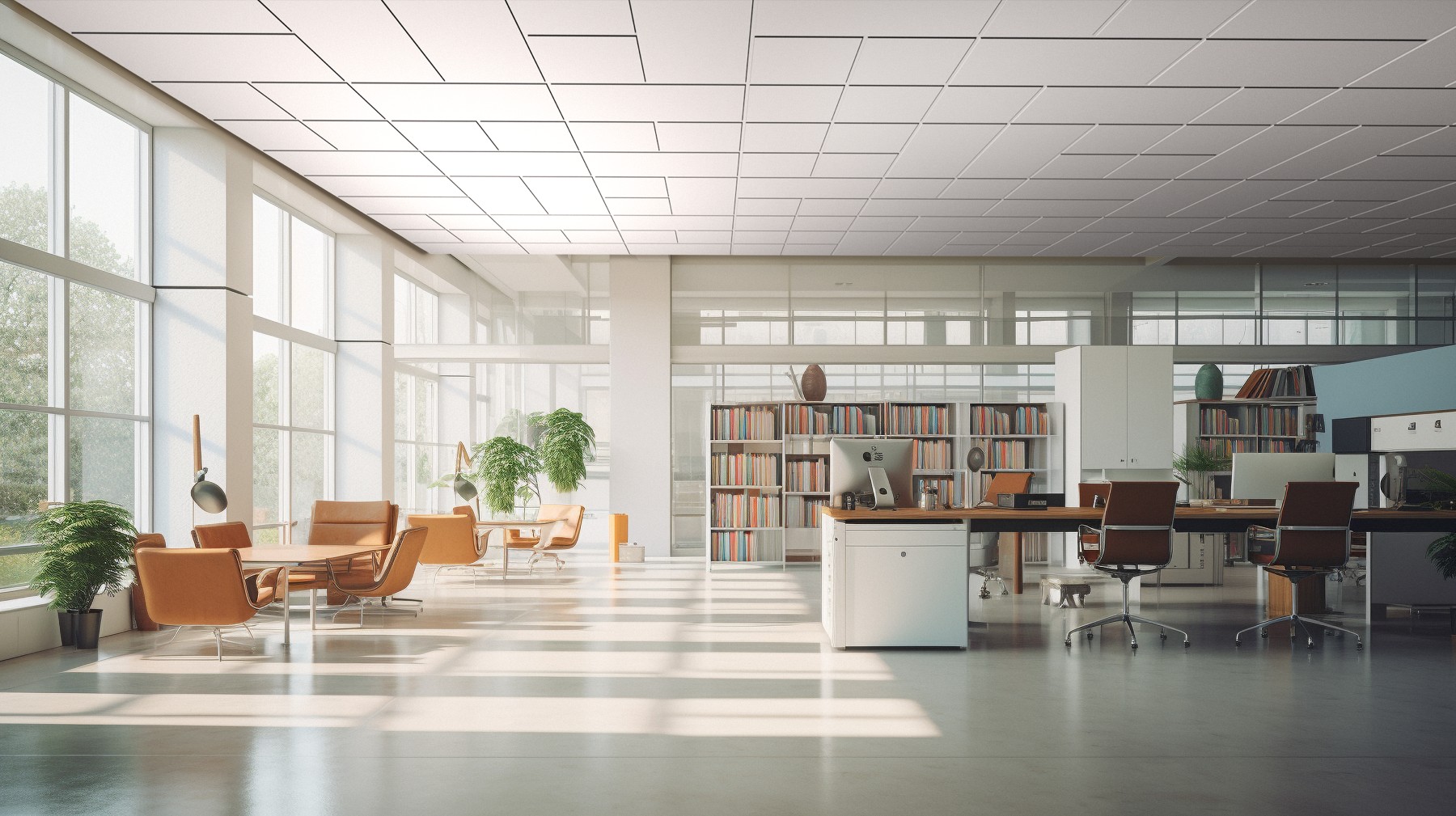
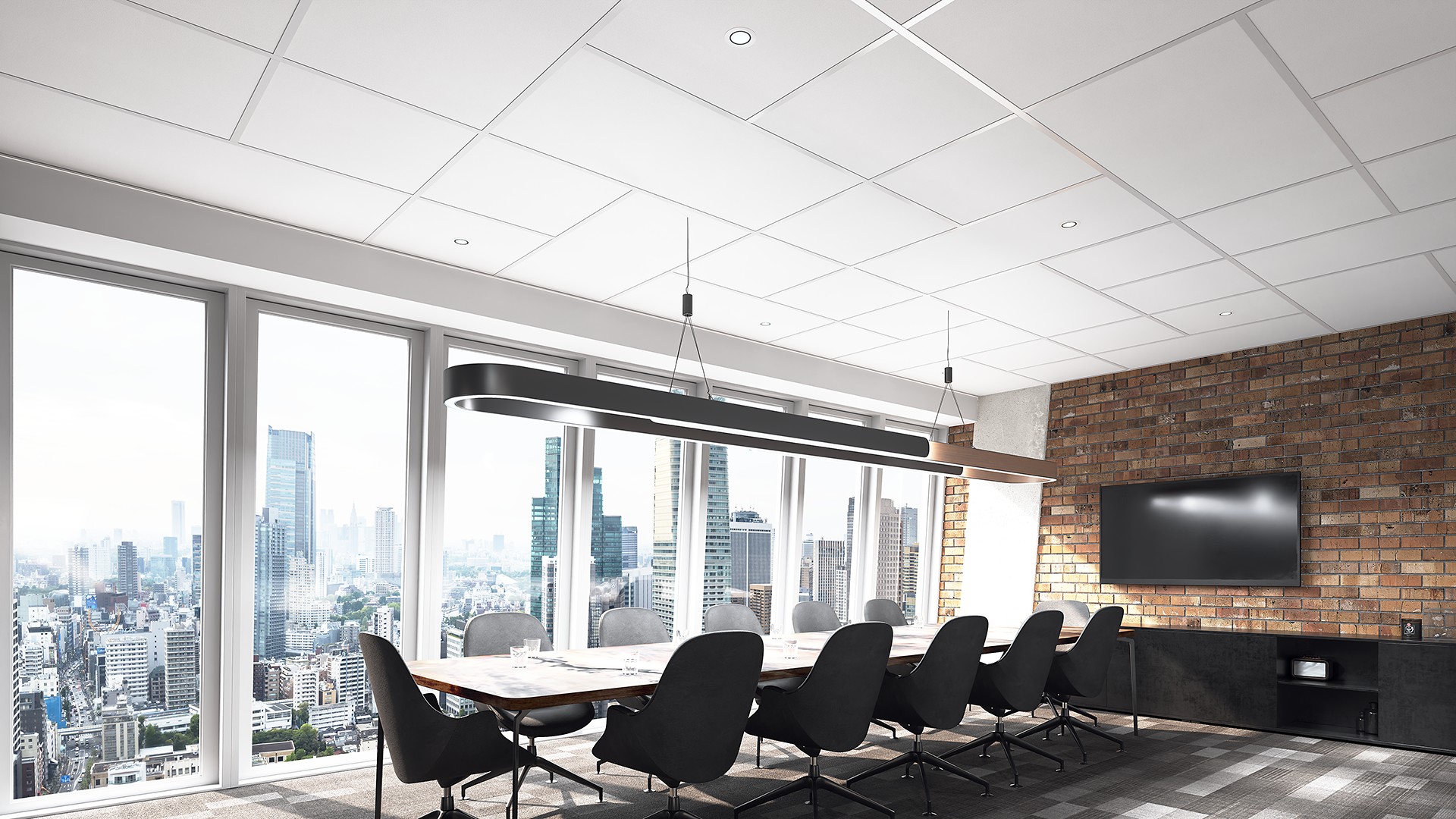
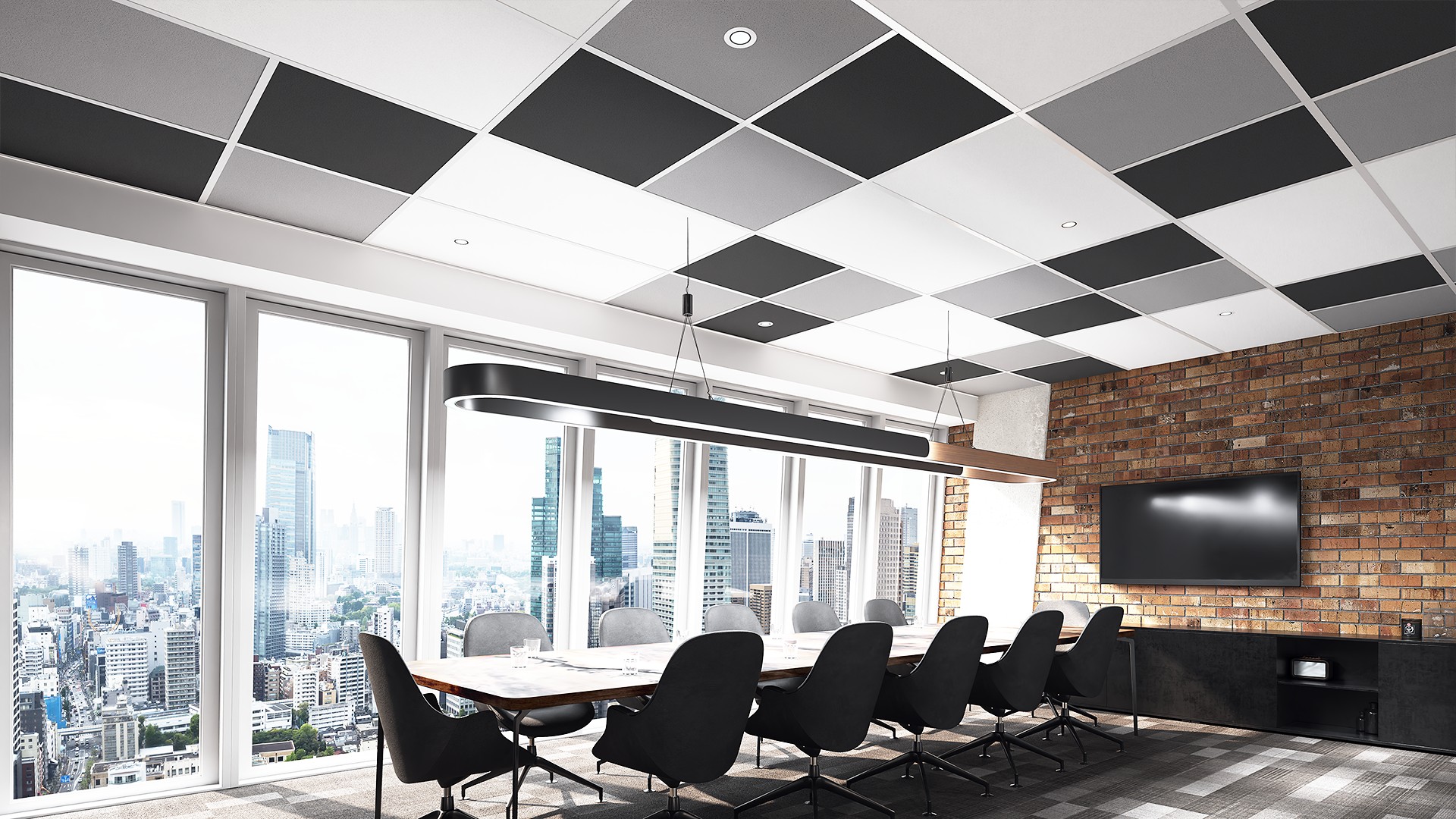
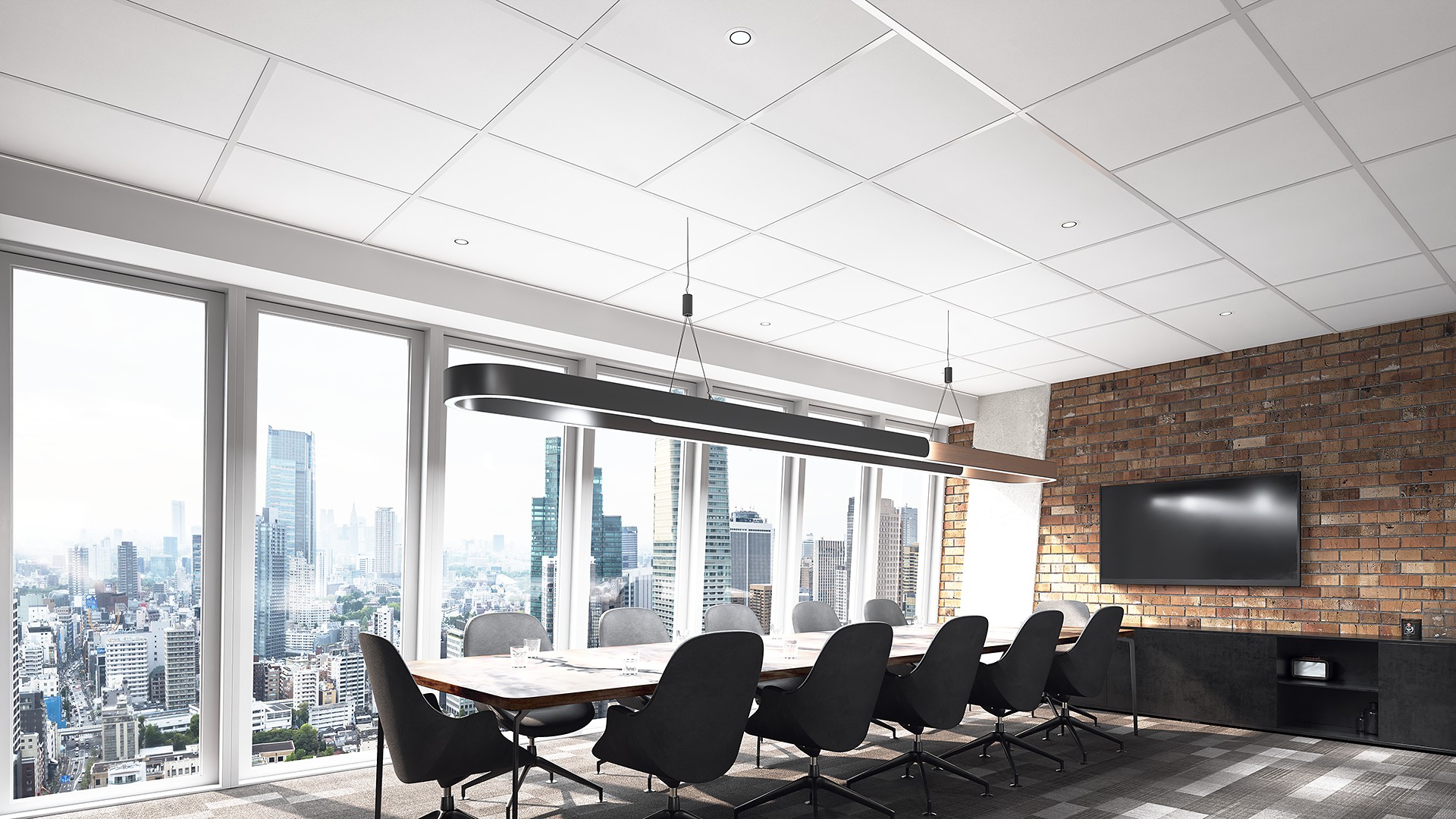
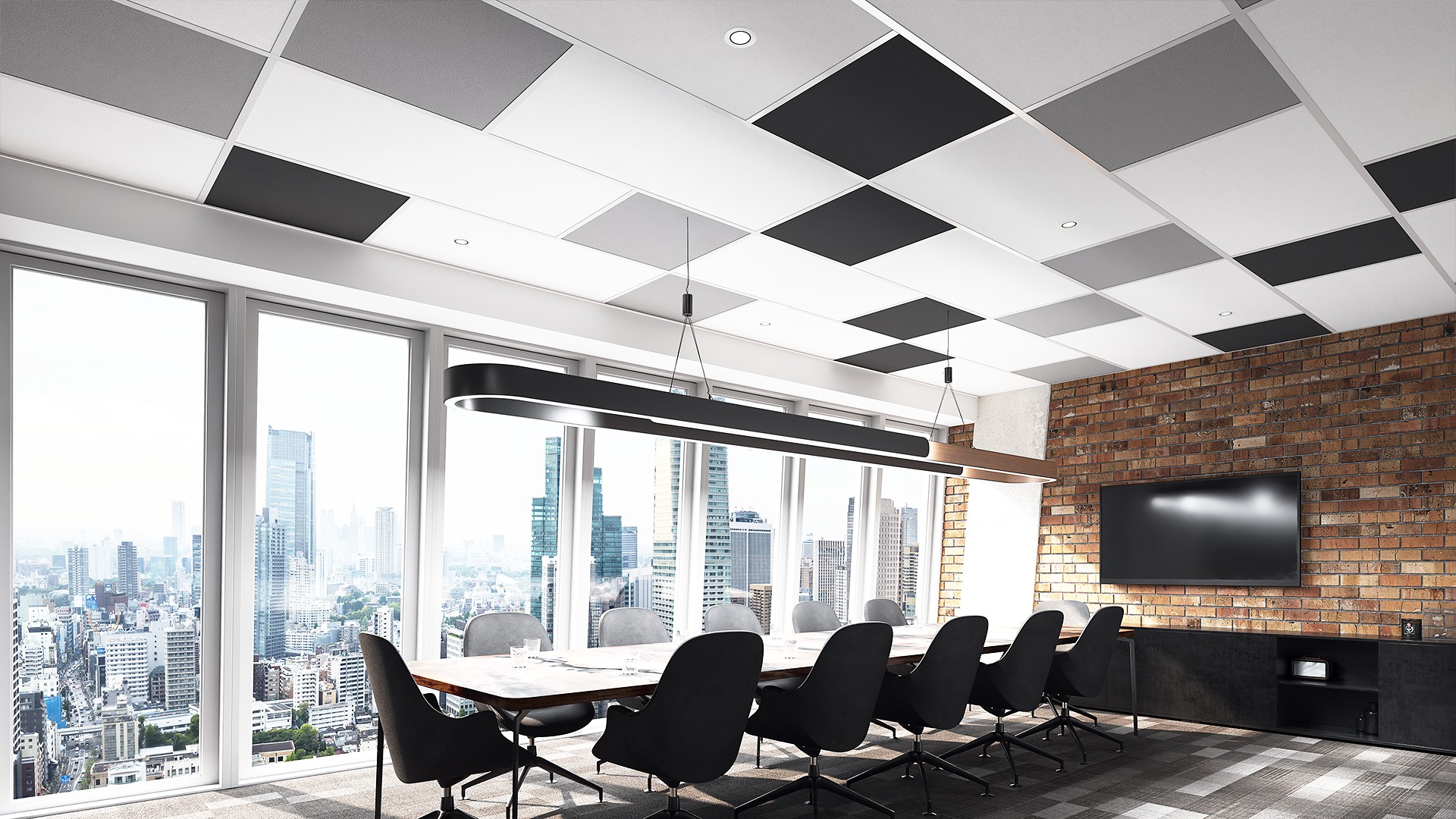
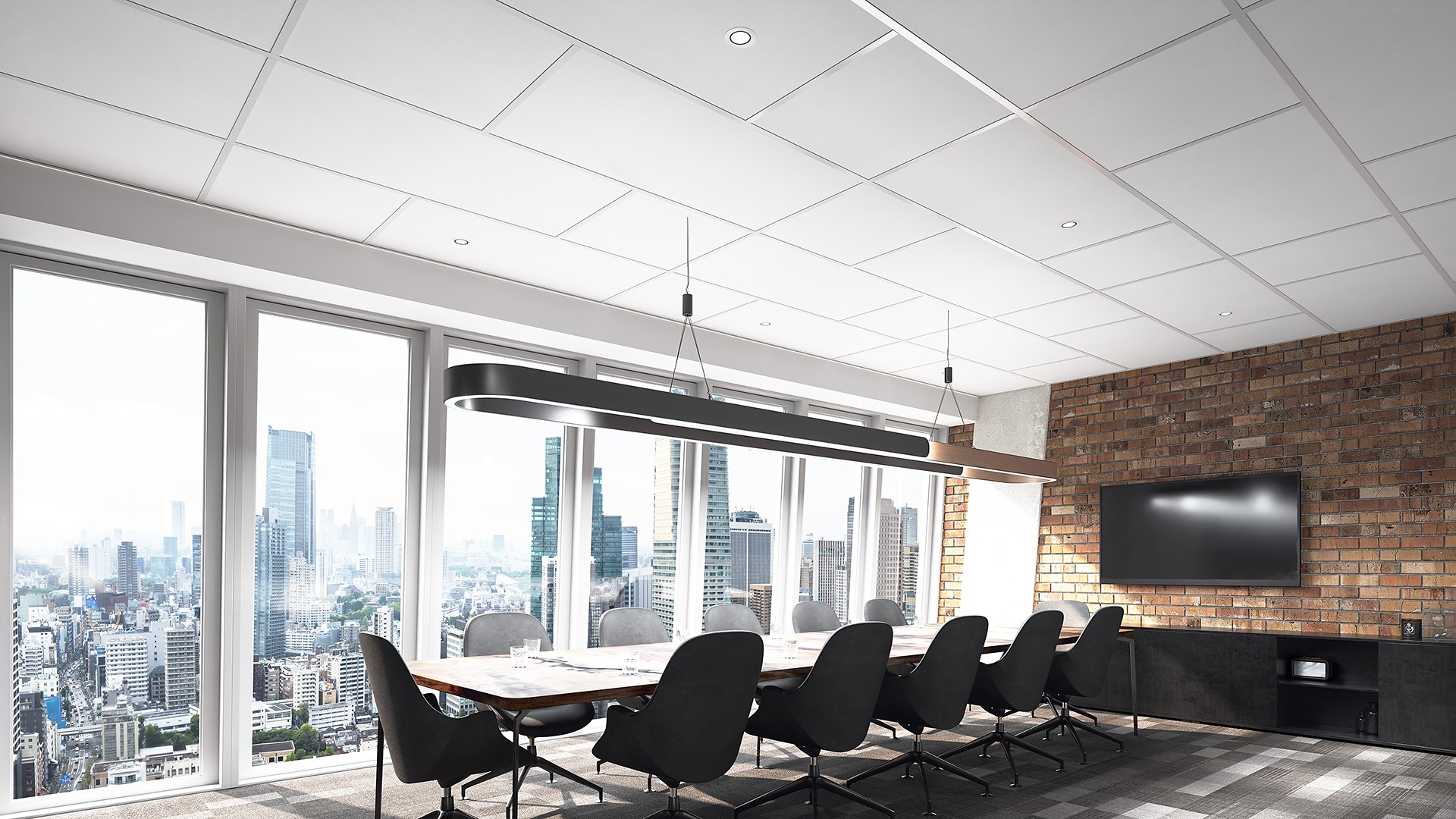
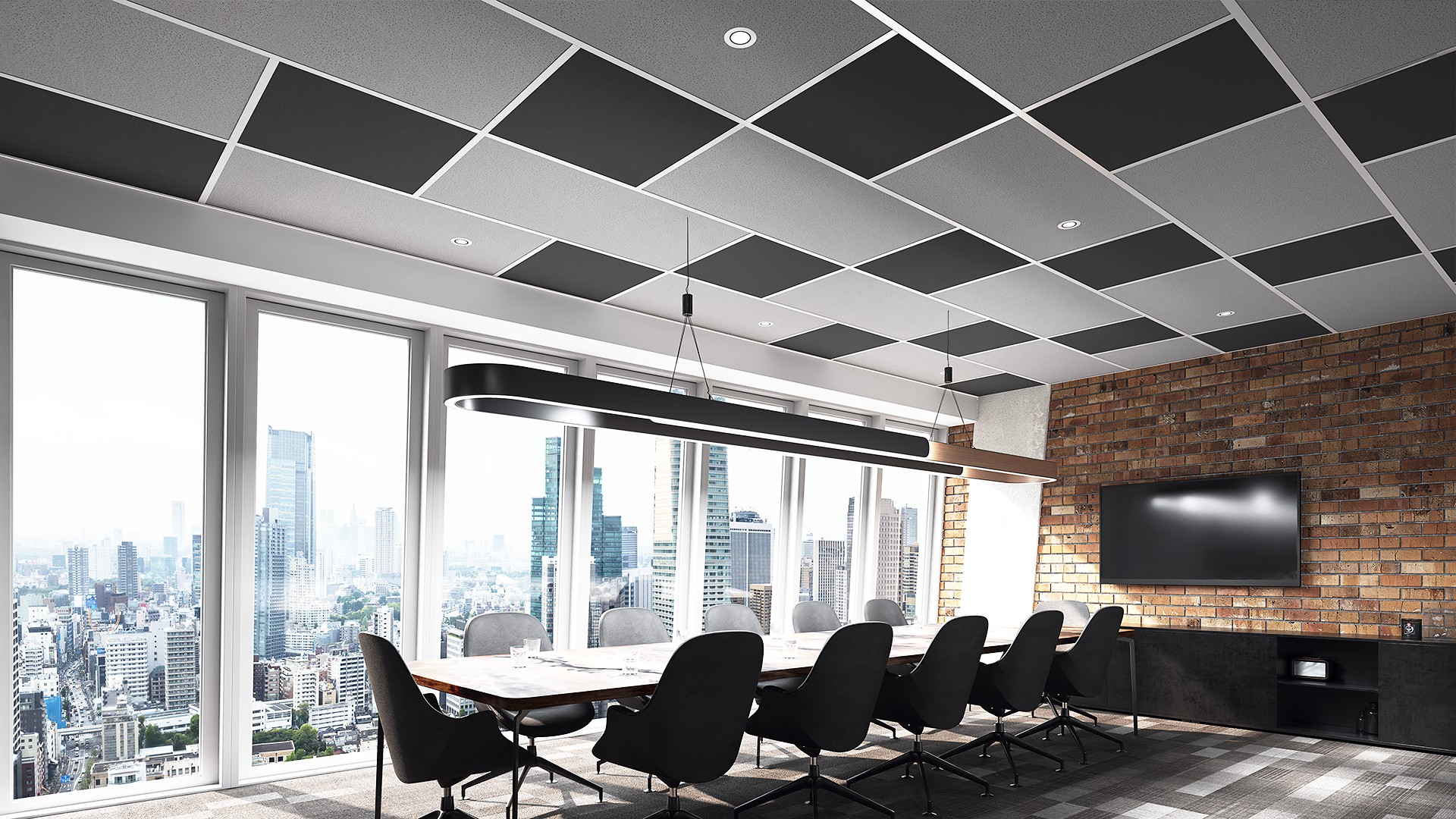
We wanted the Nexus Layouts option to be applicable to the majority of our tile range to give the most flexibility visually and functionally. The patterns can be subtle when using a standard white tile in two tile sizes, or more distinct when used with different colours or DecoMesh.
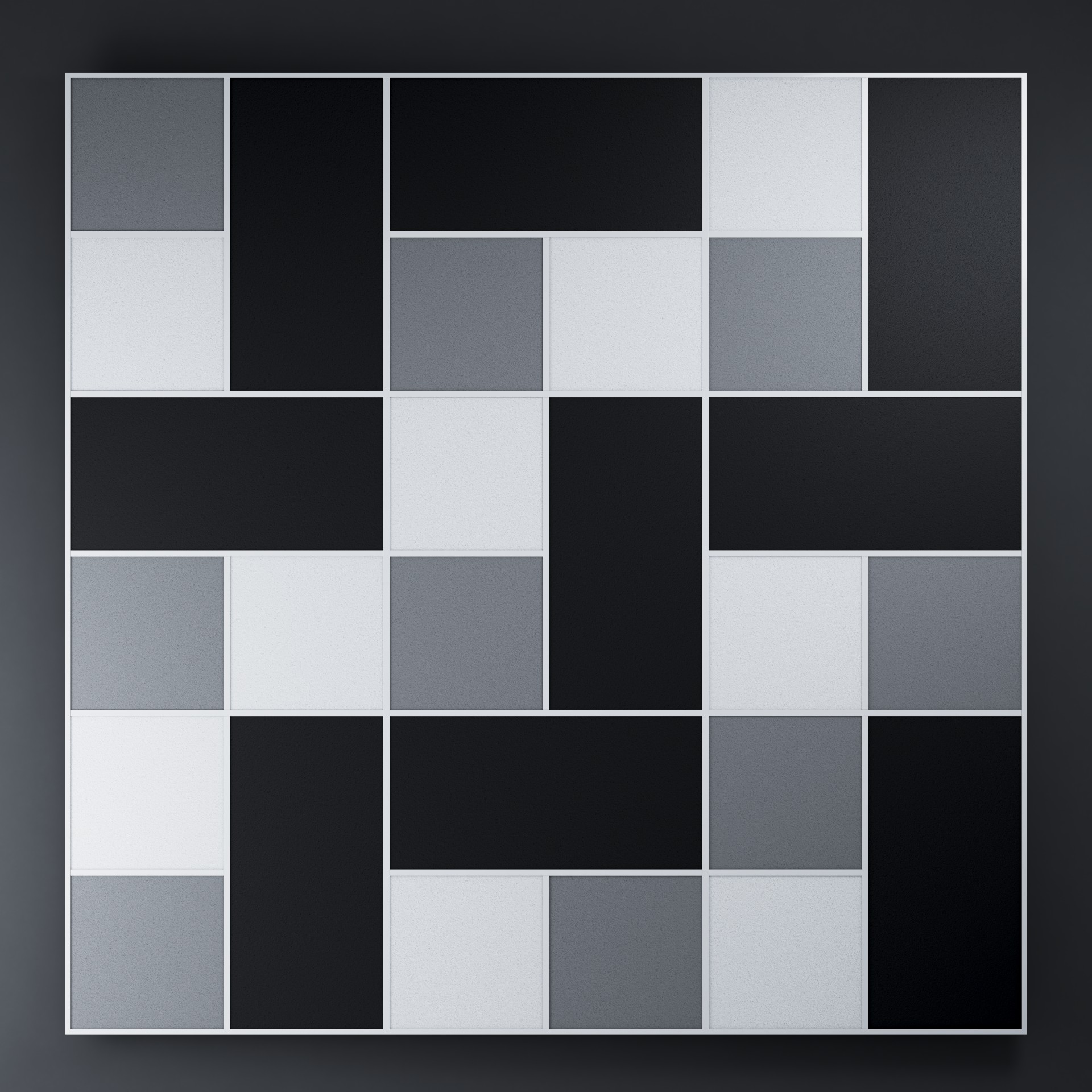
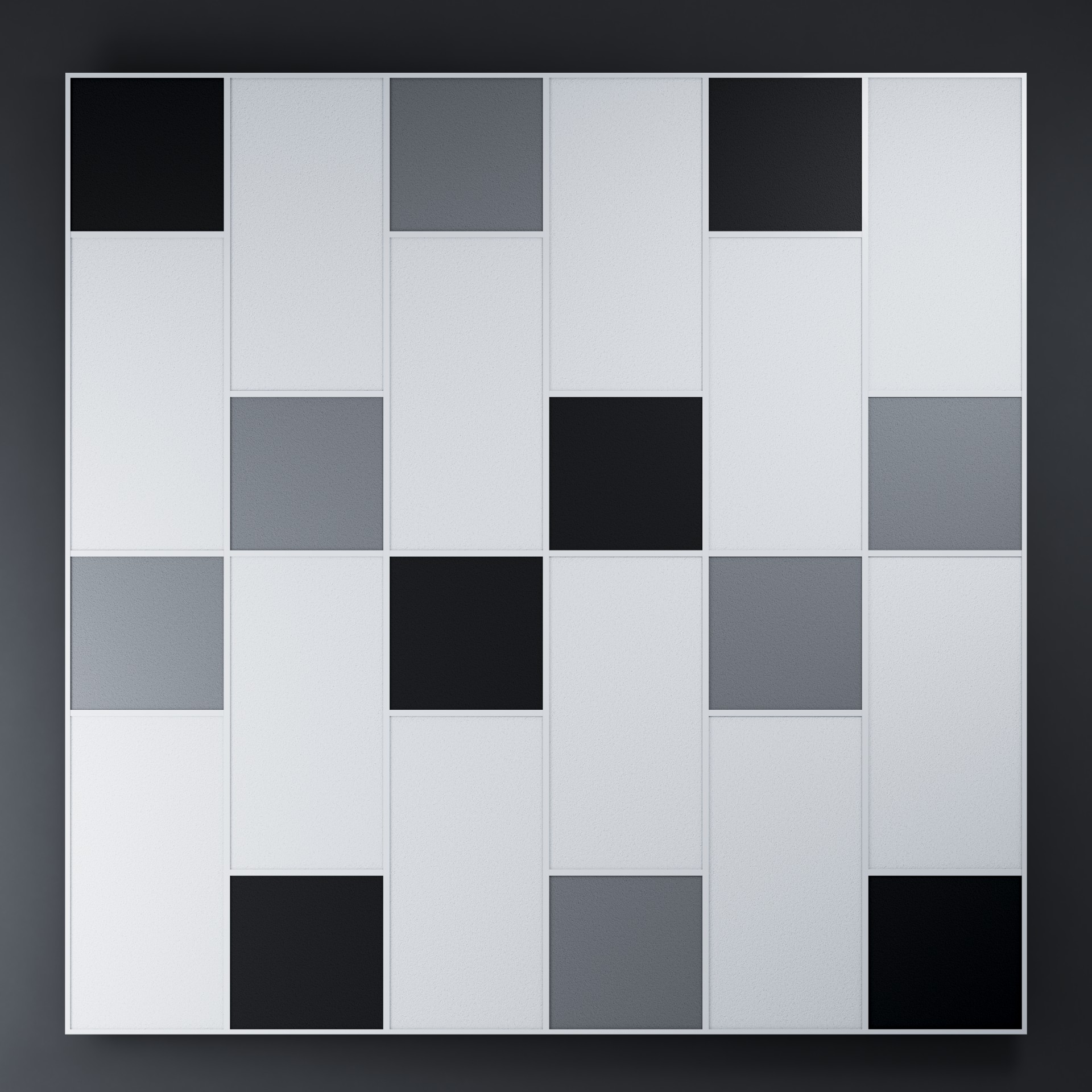
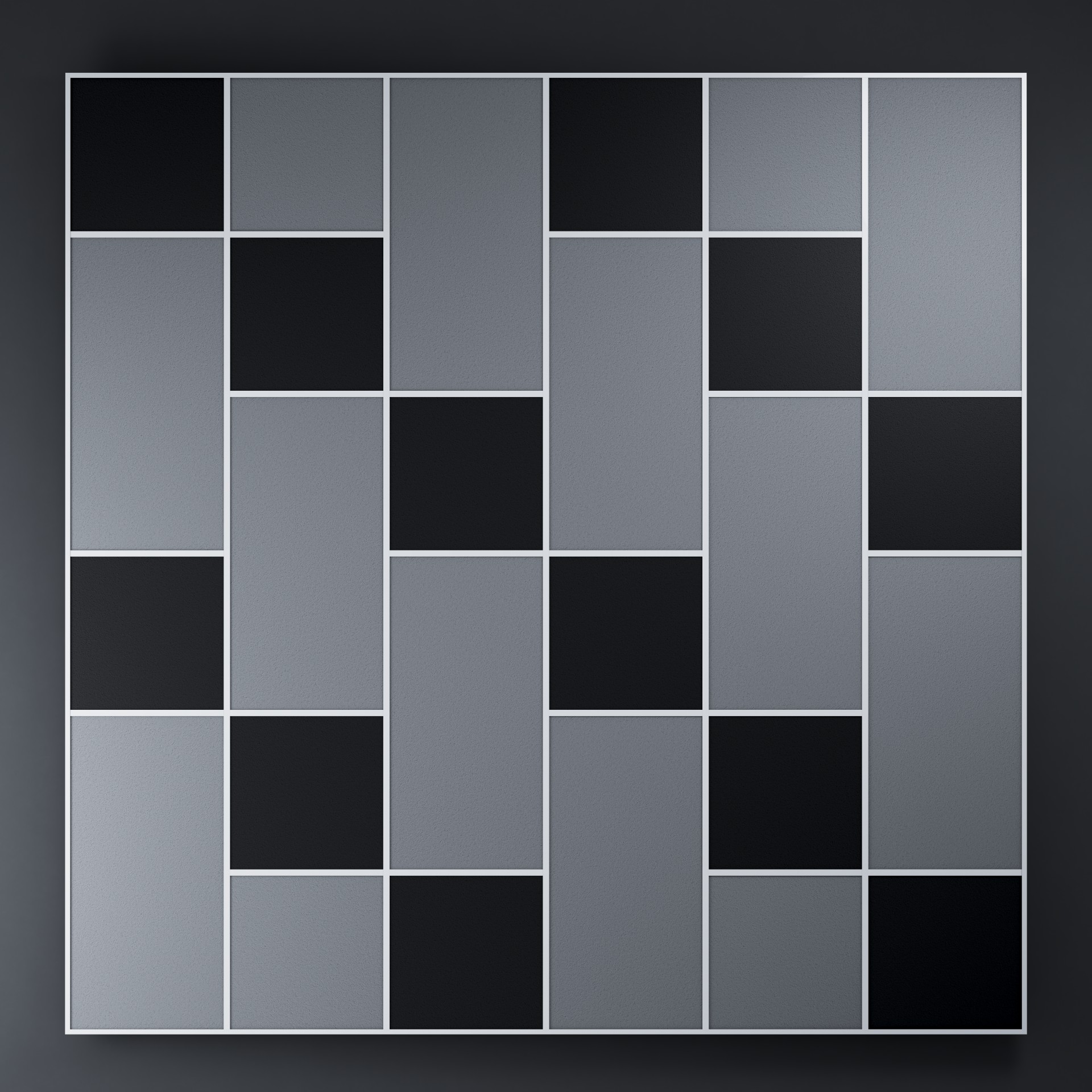
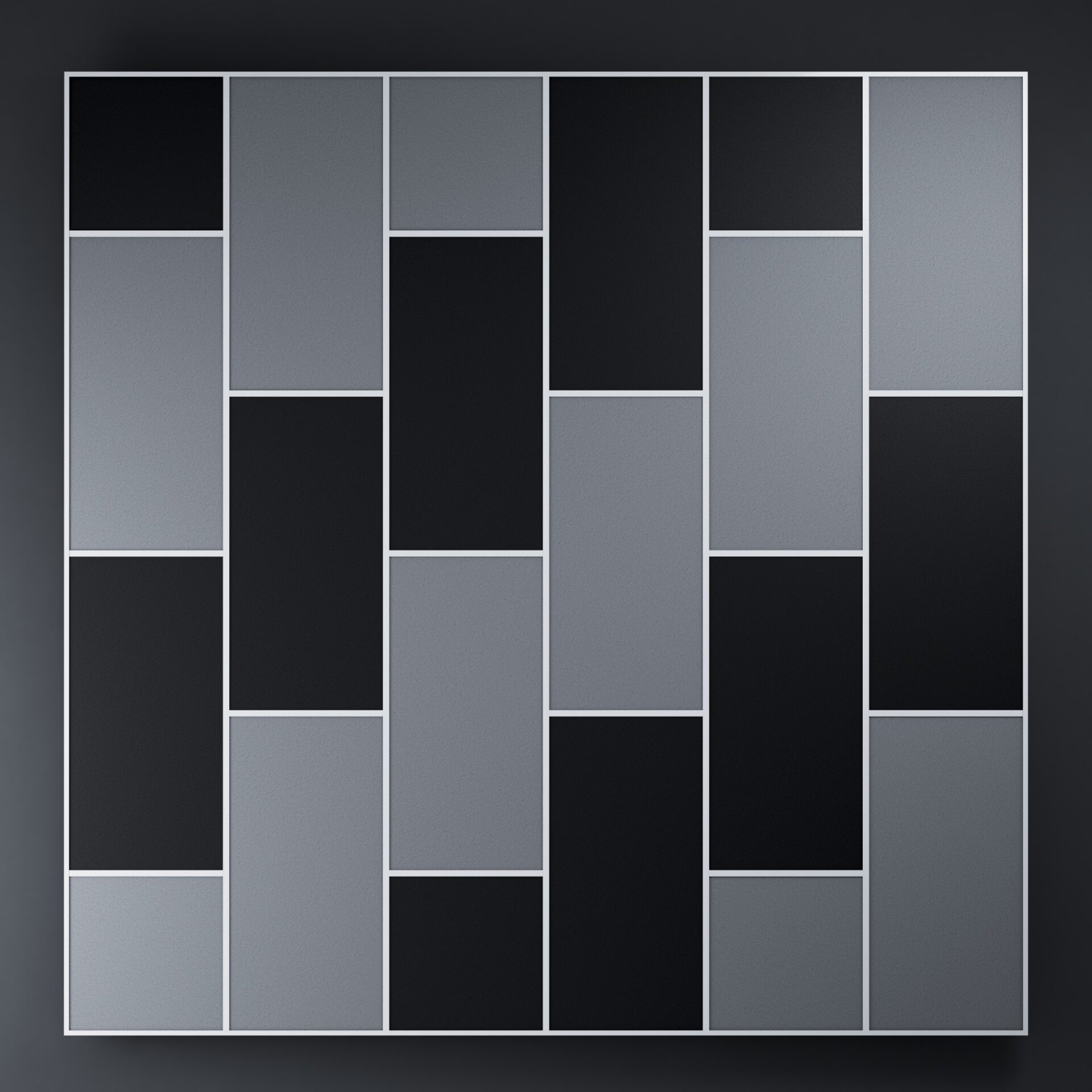
Each of the five launch patterns (Array, Exclaim, Berg, Pixal and Step) creates a different architectural effect. How did you decide which patterns to debut with?
There are literally hundreds of options when it comes to the patterns and the colour combinations within each one. We felt we needed to give some inspiration to show what was possible, and the five patterns all bring a slightly different visual, but from a few standard parts.
The long list was very long, and it took several sessions to shortlist down to the offer we have launched. My personal favourite is Berg. No guesses for the inspiration behind this particular pattern. (Pink and yellow tiles are optional.)
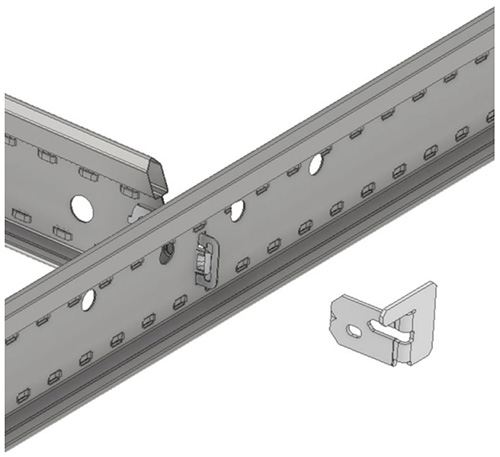 The Single Tee Adaptor Clip (BPSTAC) is described as the key component that makes all Nexus Layouts configurations possible. Why was this piece of engineering so critical to the system’s development?
The Single Tee Adaptor Clip is the critical element that allows the majority of these patterns to be made possible. It is used where there is only one cross tee connected into the rout hole of the main runner or primary cross tee.
By using the clip, pushed into the rout hole from the opposite side of the main runner, it fills the space within the rout and centres the cross tee. This improves alignment, but also makes a very strong and stable connection.
Early designers are already using Nexus Layouts to turn ceilings into architectural features rather than background surfaces. How do you see Nexus Layouts changing ceiling design habits or expectations?
It is great to see the early adoption of the Nexus Layouts system. There have certainly been some striking ceilings created.
Quite often, ceilings are an afterthought, a functional requirement, and a quick solution is specified and forgotten about. Now the flexibility is available to maintain the functionality but to be more playful with the visual aspect of the ceiling, all without the premium price tag or the time spent designing a custom solution.
With increasing focus on wellbeing and sustainability in the built environment, how does Nexus Layouts support goals such as acoustic comfort, light reflectance, low VOCs or recycled content?
As Nexus Layouts is made from standard components, the performance of the ceiling tile can be fine-tuned to meet the particular requirements of the space it is being used in.
For example, a tile with a high light reflectance might be used in darker areas to help bounce daylight to the back of deep plan offices, or to reduce the number of lights required in the space. In open plan areas with lots of hard surfaces, a higher sound absorbing tile can be used.
Where the space already has some soft surfaces such as carpet or room dividers, a medium density or medium sound absorbing tile will be more appropriate.
All of this performance is interchangeable but compatible with Nexus Layouts.
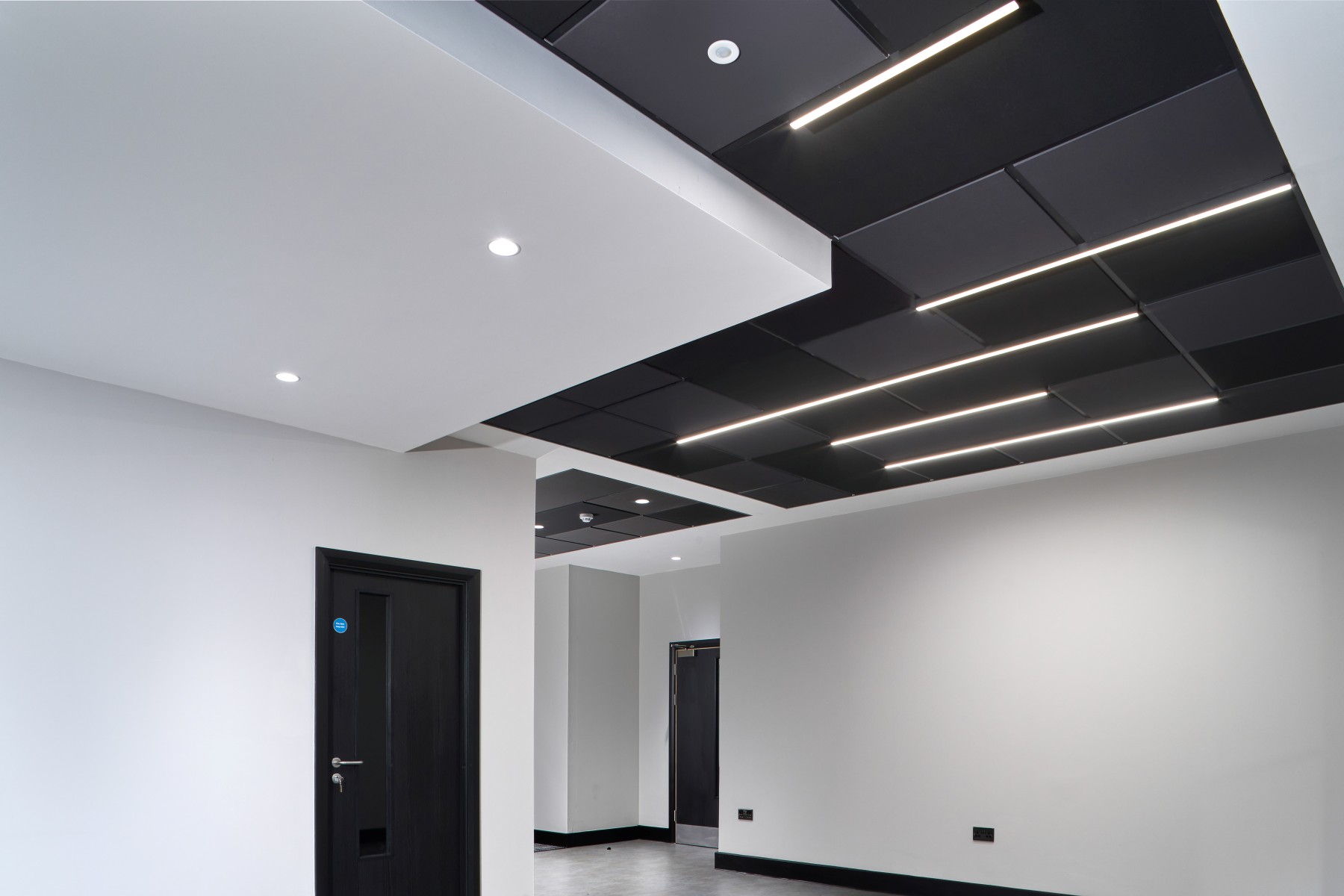 In these early weeks since launch, what types of projects or sectors are showing the strongest interest in Nexus Layouts?
The early adopters have been commercial office projects, but in a mix of areas. Some have been in reception areas to make a moody, bold statement while welcoming visitors to the building. Others have been in larger floor plate areas, repeating patterns over much larger spaces.
We have also seen Nexus Layouts being incorporated into our DecoFrame rafts to define banks of workstations, breakout areas and boardrooms.
Nexus Layouts was designed to be both predefined and customisable. What kinds of bespoke requests are you seeing already, and what do they tell you about the future of ceiling design?
Where the standard five patterns are seen as the starting point, it has become clear that once the designer is comfortable with the fundamentals of how the system goes together, they want to add their own creativity and mark to the designs. Brighter colours and different colour combinations are also some of the early trends we are seeing.